
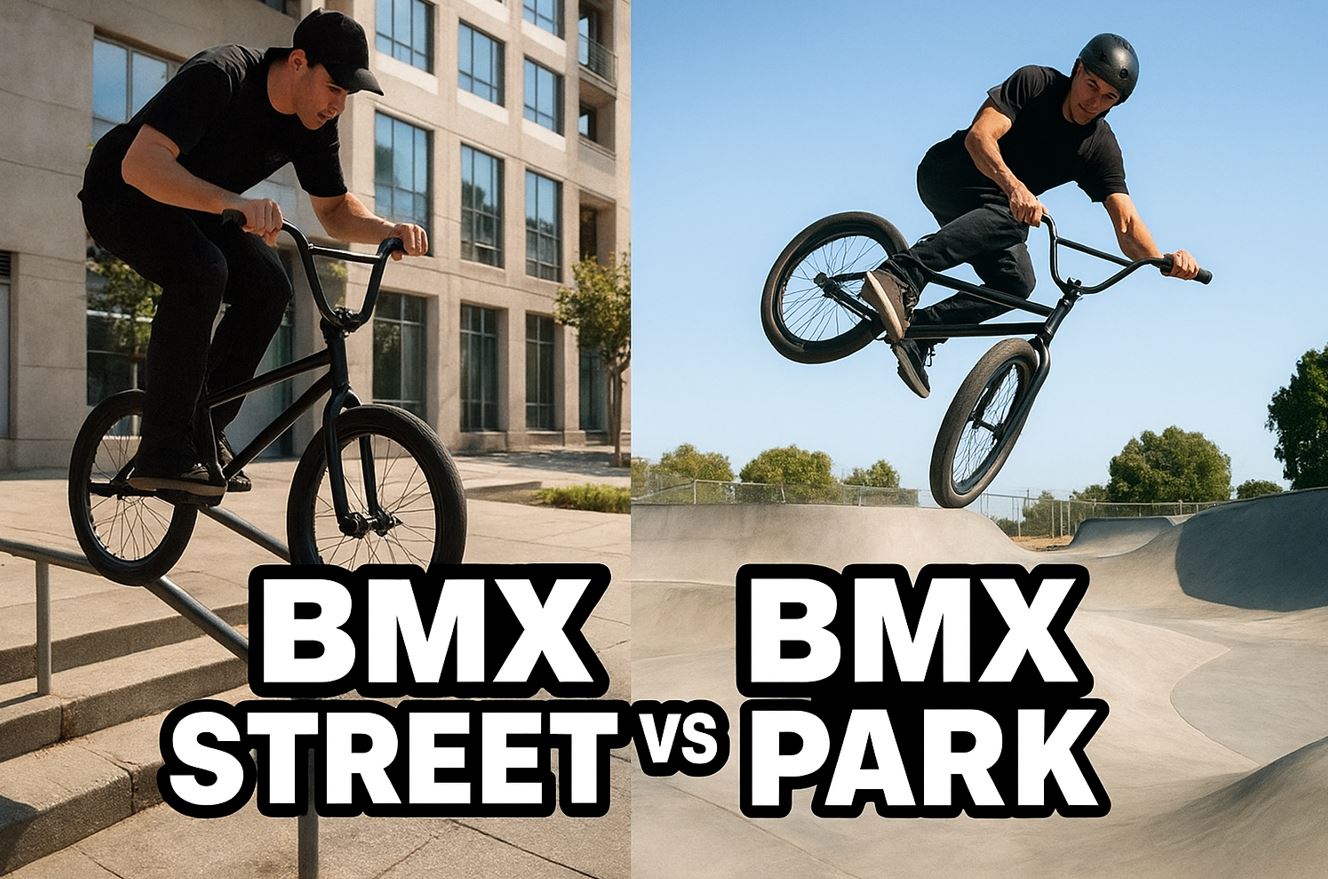
BMX (Bicycle Motocross) is one of the most exciting and visually thrilling cycling sports in the world. From grinding rails in the city streets to flying through the air inside massive skateparks, BMX offers riders endless ways to express creativity, athleticism, and style. But not all BMX riding is the same. Two of the most popular disciplines — BMX Street and BMX Park — may look similar to the casual observer, yet they differ significantly in environment, technique, bike setup, and rider mindset.
If you’re new to BMX or looking to decide which type suits you best, this guide will break down the main differences between Street and Park riding — from terrain and tricks to bikes and culture.
1. The Environment: Streets vs. Ramps
The first and most obvious difference between BMX Street and BMX Park lies in the environment where riders perform.
BMX Street
Street riding takes place in urban environments — think staircases, handrails, ledges, curbs, benches, walls, and even parking lots. Riders use the city itself as their playground, transforming everyday structures into obstacles for tricks and stunts. Street riders often have to adapt creatively to whatever the city offers. Each spot presents unique challenges: rough pavement, tight spaces, or steep drops.
Since no two street spots are exactly alike, this style emphasizes creativity, technical skill, and adaptability. Riders must learn to handle unpredictable terrain and think outside the box.
BMX Park
BMX Park, on the other hand, is performed in skateparks designed specifically for tricks and aerial maneuvers. These parks often feature smooth concrete or wooden surfaces with ramps, bowls, quarter pipes, spines, and box jumps. Because of the consistent layout and smoother conditions, park riding allows for greater speed, flow, and height.
Park riders tend to focus on aerial tricks, spins, and transitions — creating long, flowing lines across multiple obstacles in one continuous motion. It’s smoother and faster, while street riding is more raw and technical.
2. Style and Type of Tricks
Each discipline has a distinct style that reflects its environment.
Street Style
Street tricks tend to be technical and precise. Riders often perform grinds, manuals, and combinations that require tight control rather than big air. Common tricks include:
- Grinds (on pegs): feeble, smith, double peg, and icepick grinds.
- Manuals and Nose Manuals: balancing on one or both wheels without pedaling.
- Bunny Hops: jumping without ramps, used to clear obstacles or onto ledges.
- Tailwhips and Barspins: often done off ledges or small drops.
Street riders focus more on creativity and originality — how they use the city environment in unexpected ways. Every trick tells a story about the rider’s vision and ingenuity.
Park Style
Park tricks are fast, high-flying, and flowing. Because ramps and jumps are designed to launch riders, aerial stunts dominate this style. Common tricks include:
- Flips and Spins: backflips, frontflips, 360s, and 720s.
- Tailwhips and Barspins in the Air: done off ramps or box jumps.
- Transfers and Airs: moving smoothly between obstacles with big air.
- Flairs and Wallrides: blending style and technical precision.
In short, street riding values creativity and control, while park riding values speed, amplitude, and flow.
3. The Bike Setup
Even though both types use BMX bikes, the setups are slightly different to match their environment and style.
BMX Street Bike Setup
Street bikes are designed for durability and balance. Since street riding often involves grinding on concrete and metal, these bikes are built to withstand abuse. Key features include:
- Heavier and stronger frame for impact resistance.
- Pegs on the wheels for grinding.
- Smaller gearing (e.g., 25-tooth sprocket) for better clearance and control.
- Thicker tires for grip on rough surfaces.
- Lower seat post for better maneuverability during tricks.
Street riders prioritize strength and control over lightness or speed.
BMX Park Bike Setup
Park bikes, in contrast, are built for speed, lightness, and airtime. They’re designed to flow smoothly across ramps and transitions. Features include:
- Lighter frame to make aerial tricks easier.
- Narrower tires with smooth treads for faster rolling.
- Higher gearing for maintaining momentum between ramps.
- No or fewer pegs, since grinding isn’t the focus.
- Balanced geometry for easy flips and spins.
These differences mean street bikes can take more punishment, while park bikes prioritize precision and flow.
4. Culture and Mindset
While both belong to the same BMX community, the subcultures of street and park riding have slightly different vibes.
Street Culture
Street riders are often seen as the artists and rebels of BMX. Their playground is public space — places not meant for riding — so creativity and individuality are at the core. Street riding videos often have a raw, underground feel, emphasizing the challenge of landing technical tricks in tough environments.
Street culture celebrates authenticity and expression. It’s not about perfection but about style, innovation, and personality.
Park Culture
Park riders tend to approach BMX with a competitive and athletic mindset. Many park riders train regularly to compete in local and international events — including the X Games and even the Olympic Games, where BMX Park is an official sport.
The culture values precision, consistency, and progression — always pushing the limits of what’s possible in the air. Park riders often train in professional facilities, and their riding style reflects a mix of art and athleticism.
5. Competitions and Recognition
Street Competitions
Street competitions often replicate real-world environments with rails, ledges, and stairs. Riders are judged on creativity, difficulty, and execution of their lines. Notable events include:
- Simple Session (Europe)
- Battle of Hastings
- X Games Real BMX video contests
Street riding is also widely represented in social media clips and edits — short, stylish videos that highlight personal expression rather than competition.
Park Competitions
Park competitions are more structured, featuring ramps and obstacles built for flow and airtime. Riders are scored on height, style, trick difficulty, and use of the entire park. Famous events include:
- X Games BMX Park
- UCI BMX Freestyle World Cup
- Dew Tour
In 2020, BMX Freestyle Park made its Olympic debut, solidifying its place as a legitimate global sport.
Conclusion: Two Sides of the Same Passion
BMX Street and BMX Park may differ in terrain, style, and approach, but both share the same foundation — creativity, skill, and passion on two wheels. Street riding channels urban exploration and technical mastery, while park riding unleashes speed and gravity-defying stunts.
Whether you love the gritty feel of city streets or the smooth flow of skatepark ramps, BMX offers a world of freedom and self-expression. In the end, it’s not about which style is better — it’s about how you ride, how you express yourself, and how much fun you have doing it.