
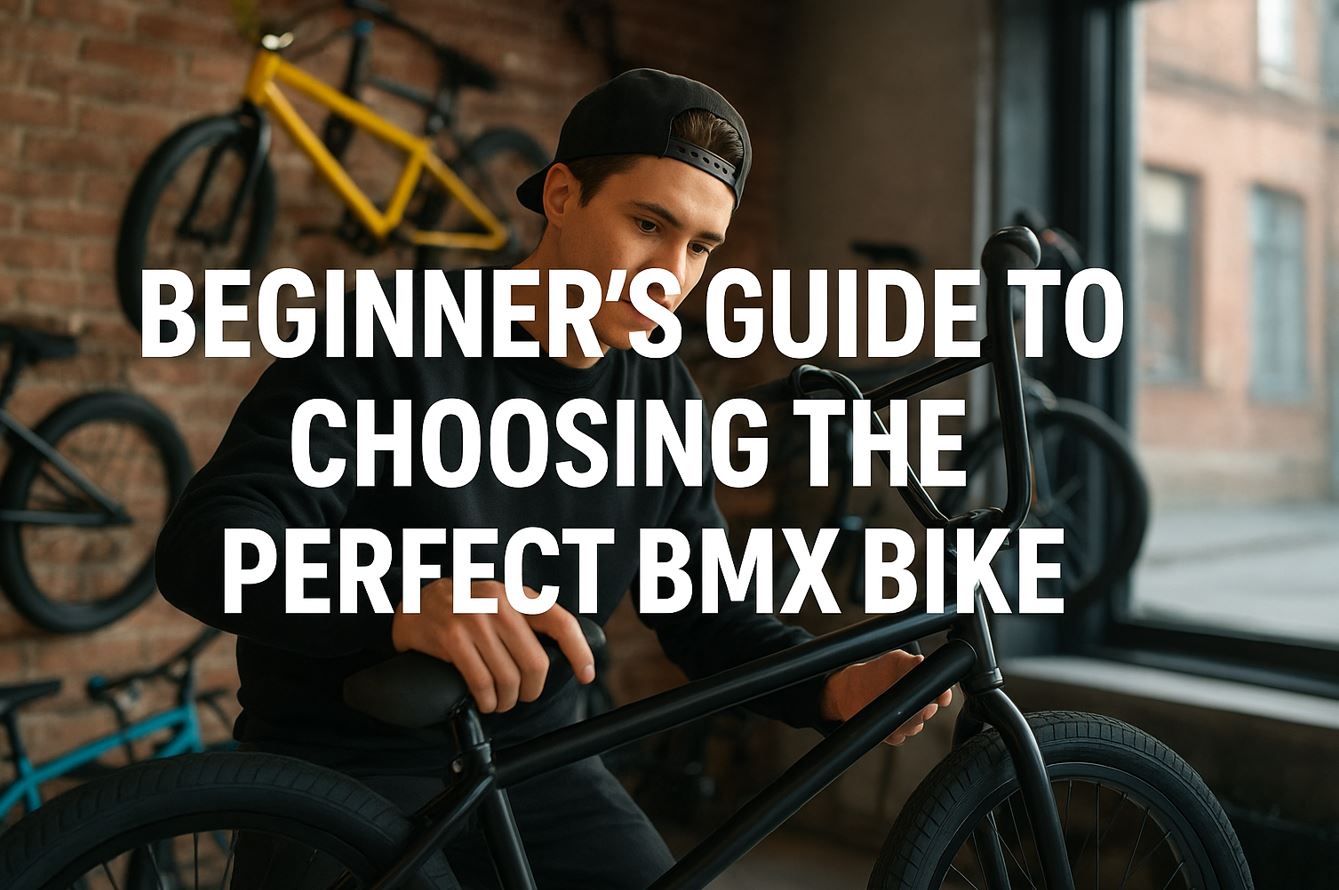
Choosing your first BMX bike can be both exciting and overwhelming. With so many models, sizes, and features available, finding the perfect one can feel like navigating a maze. Whether you’re getting into BMX for fun, tricks, racing, or freestyle riding, the right bike will make a huge difference in your comfort, performance, and progression.
This Beginner’s Guide to Choosing the Perfect BMX Bike will help you understand everything you need to know — from bike types and frame sizes to materials, geometry, and components. By the end, you’ll have the knowledge and confidence to pick the BMX that suits your style and skill level.
1. Understanding the Main Types of BMX Bikes
Before you buy, it’s important to know that not all BMX bikes are the same. Each type is designed for specific riding styles and terrains. Here are the main categories:
a. BMX Freestyle
Freestyle bikes are the most common type and are built for tricks, jumps, and stunts. You’ll see them in skateparks, street spots, and dirt trails. They have strong frames, pegs for grinding, and thicker tires for stability.
Subcategories include:
- Street BMX: Designed for urban riding — stairs, rails, ledges, etc.
- Park BMX: Lightweight with responsive handling for ramps and bowls.
- Flatland BMX: Built for balance tricks on flat ground, with shorter frames and smooth tires.
- Dirt Jump BMX: Focused on jumps; features knobby tires and sturdy frames.
b. BMX Racing
Racing BMX bikes are built for speed and acceleration on dirt tracks. They are lightweight, with narrow tires and responsive geometry for fast cornering.
c. Cruiser BMX
Cruiser BMX bikes have larger 24-inch wheels (instead of the usual 20-inch) and are great for taller riders, older beginners, or those looking for a smoother, more comfortable ride.
2. Choosing the Right Frame Size
Frame size is one of the most important aspects when choosing your BMX bike. A properly fitted bike will give you better control, comfort, and safety.
Most BMX bikes use 20-inch wheels, but the top tube length of the frame (the horizontal bar from the seat to the handlebars) varies depending on rider height.
Here’s a general guide:
| Rider Height | Recommended Top Tube Length |
|---|---|
| Under 4’6” (140 cm) | 16” – 18” (Micro/Mini) |
| 4’6” – 5’1” (140–155 cm) | 18.5” – 19.25” |
| 5’1” – 5’8” (155–173 cm) | 19.25” – 20.5” |
| 5’8” – 6’0” (173–183 cm) | 20.5” – 21” |
| Over 6’0” (183+ cm) | 21” – 21.75”+ |
Tip:
If you’re between sizes, choose based on your riding style — smaller frames are better for tricks and technical control, while larger frames feel more stable at high speeds.
3. Frame Materials: Strength vs. Weight
The material your BMX frame is made from affects durability, weight, and cost. Here’s what you should know:
a. Hi-Tensile Steel (Hi-Ten)
- Most affordable option, found in entry-level BMX bikes.
- Heavier and less durable than other materials.
- Ideal for beginners who are just learning the basics.
b. Chromoly Steel (4130)
- The standard for mid-to-high-end BMX bikes.
- Lighter, stronger, and more flexible than Hi-Ten.
- Provides a smoother, more responsive ride.
If you plan to ride regularly or learn tricks, Chromoly is worth the investment.
c. Aluminum
- Very lightweight and rust-resistant.
- Common in BMX racing bikes, not freestyle.
- Not as strong for impact-heavy stunts.
4. Geometry: How It Affects Handling
The geometry of a BMX bike — particularly the head tube angle, chainstay length, and bottom bracket height — determines how it feels and handles.
Here’s a simplified breakdown:
- Shorter chainstay (13”–13.5”) → Quicker turns, easier spins.
- Longer chainstay (13.75”–14”+) → More stability, smoother landings.
- Steeper head tube angle (75°) → Faster steering, ideal for technical tricks.
- Slacker head tube angle (74°) → Stable for dirt and racing.
If you’re just starting, go for a balanced geometry that offers both control and comfort.
5. Components That Matter Most
When buying your first BMX, it’s easy to get lost in details. Focus on the components that make the biggest difference in performance:
a. Wheels & Tires
- 20-inch wheels are standard for freestyle BMX.
- Thicker tires (2.2”–2.4”) provide better grip and shock absorption.
- Thin tires (1.75”–1.95”) are used in racing for speed.
b. Handlebars
Handlebar height and width affect comfort and control. Taller bars provide more leverage for tricks, while narrower bars suit smaller riders.
c. Brakes
Many freestyle BMX riders remove brakes for aesthetics or freedom of movement, but as a beginner, keep at least a rear brake for safety.
d. Cranks and Pedals
Look for 3-piece cranks (stronger than 1-piece designs) and metal pedals for better grip. Plastic pedals are lighter but wear faster.
e. Pegs
If you plan to grind or do street tricks, make sure your bike supports pegs on the front and rear axles.
6. Weight and Build Quality
The average BMX bike weighs 23–28 pounds (10–13 kg). Lighter bikes are easier to control and lift, but durability is more important for beginners. Don’t get caught up in shaving grams — prioritize strength and reliability first.
7. Budget: What You Should Expect to Spend
Your budget will influence your choices, but even entry-level BMX bikes today offer great value.
- $200–$350 USD: Basic beginner bikes (Hi-Ten steel, single-wall rims). Good for learning.
- $350–$600 USD: Mid-level bikes (Chromoly parts, double-wall rims, better components).
- $600+ USD: Professional-grade bikes (full Chromoly, sealed bearings, lightweight builds).
Tip:
Avoid ultra-cheap department store bikes — they might look good but often lack the strength and geometry for real BMX riding.
8. Style and Personalization
One of the best things about BMX is that it’s an expression of individual style. Once you get your bike, you can customize it with new grips, pegs, tires, or color schemes.
A bike that reflects your personality will motivate you to ride more often — and that’s what BMX is all about.
9. Try Before You Buy
If possible, visit a local bike shop and test different models. A few minutes of riding will tell you more than hours of research. Bike shops can also help you make small adjustments to your fit, tire pressure, and bar position for maximum comfort.
10. Maintenance and Care
Taking good care of your BMX extends its lifespan and keeps you safe. Regularly check:
- Tire pressure
- Chain tension and lubrication
- Bolts and axle nuts
- Brake cables (if installed)
Clean your bike after muddy sessions and store it indoors to prevent rust.
Final Thoughts
Choosing the perfect BMX bike isn’t about getting the flashiest frame or the most expensive parts — it’s about finding the right fit for your body, goals, and riding style.
Start simple, master the basics, and upgrade as your skills grow. A well-chosen bike will not only make learning easier but also help you fall in love with the freedom and creativity that BMX riding offers.
So, grab your helmet, get out there, and start your journey — because every great rider begins with the right bike and the courage to ride it.